Your Customers Are Booking After Hours. Is Your Business Still Making Them Wait?
Customers make decisions after hours. Learn how self-service appointment booking can reduce friction and create a smoother customer journey.
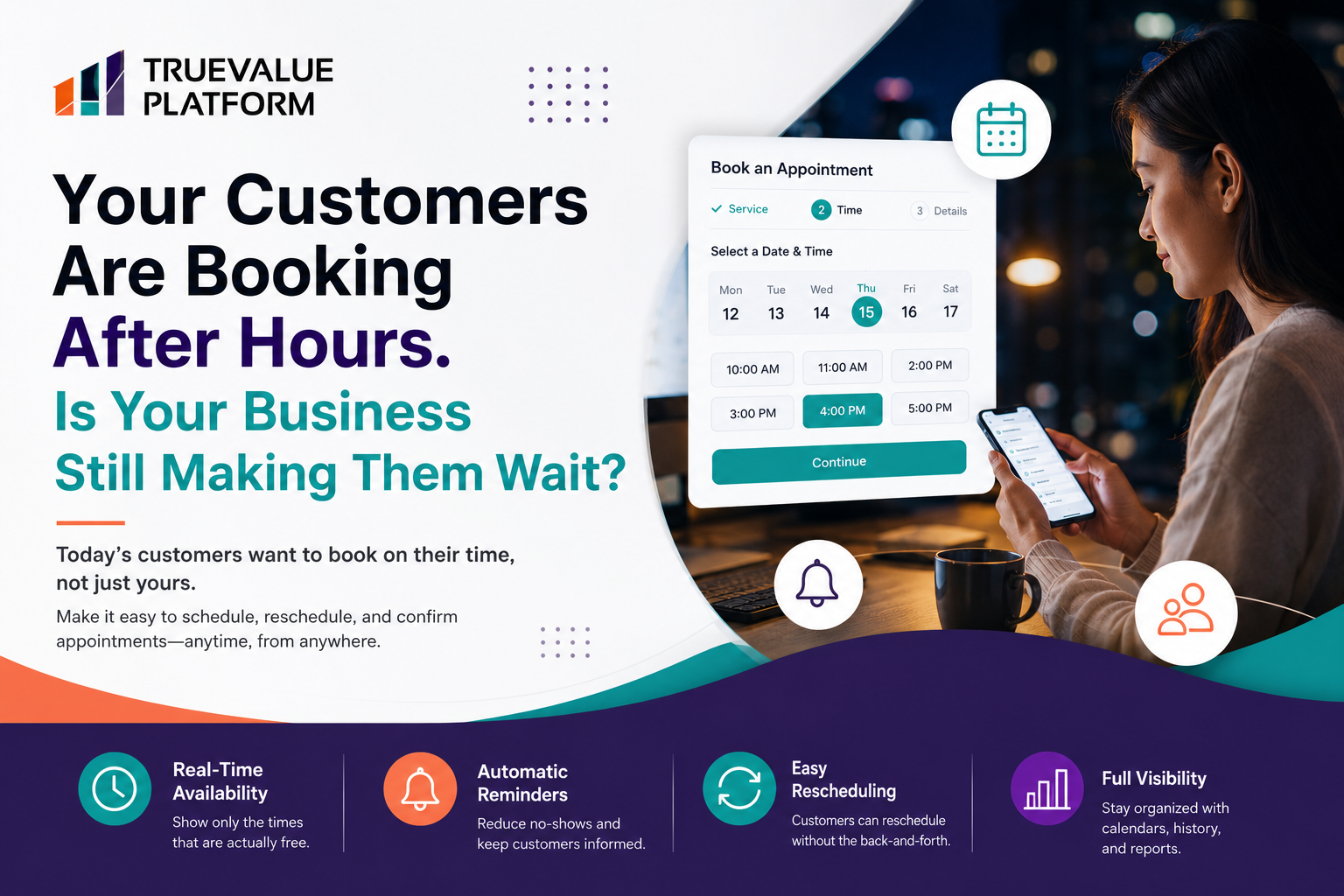
It is 8:47 p.m.
A potential customer has finally found a quiet moment to research a service they have been considering for weeks. They open your website, read about your business, check your location and decide they are ready to speak with someone.
Then they reach the contact page.
“Call us between 9 a.m. and 5 p.m.”
There is no way to view available times. There is no booking link. There is only a contact form and a promise that somebody will respond.
The customer does not dislike your business. They simply do not want to add another task to tomorrow’s list.
So they open the next website.
That small moment reveals a growing customer-experience problem: the customer is ready to move forward, but the business process is closed.
Your customers do not make decisions only during office hours
People research services when their schedules allow it.
That might be during a commute, after putting their children to bed, between meetings or on a Sunday afternoon. By the time they reach your website, they may already understand your service, compare their options and know what they want to discuss.
Their next question is simple:
“When can I speak with someone?”
Increasingly, customers expect to answer that question themselves.
In March 2026, Gartner reported that 67% of surveyed B2B buyers preferred a sales-representative-free experience. This does not mean buyers never want human guidance. It means many prefer to control the early stages of the journey and speak with someone when the conversation becomes valuable.
The same expectation is visible in appointment-led services. SimplyBook.me’s 2025 report analysed more than 25.4 million anonymised bookings processed during 2024. It found that most booking journeys began on mobile and that nearly all appointments in its dataset were scheduled directly by customers.
Public booking is no longer just a calendar convenience. It is becoming part of how customers evaluate whether a business will be easy to work with.
The real problem is not your opening hours
Your employees do not need to work around the clock.
The problem is expecting customers to wait until your team is available before they can take a simple administrative step.
Consider the traditional process.
A customer submits an enquiry at night. An employee replies the following morning and asks when the customer is available. The customer responds later that afternoon with two possible times.
The employee checks the calendar, but neither time is available. Another message is sent. The customer suggests a different day. The employee needs to confirm which team member can handle the appointment.
What should have been one decision becomes a chain of messages.
Every additional step creates another opportunity for the conversation to slow down, become confusing or stop completely.
The customer may still book. But they have already spent unnecessary effort before the real conversation has even started.
Friction changes how customers judge a business
Booking is often one of the first operational experiences a customer has with a company.
Before they meet your consultant, visit your branch or attend a demonstration, they are already forming an opinion based on questions such as:
Was it easy to find the right service?
Could I see suitable appointment times?
Did the booking process work on my phone?
Could I change the appointment without calling?
Did I receive clear information about what happens next?
These details may appear administrative, but they influence trust.
Healthcare research provides a useful example. Press Ganey reported that online scheduling influenced provider selection for 80% of surveyed consumers. It also found that 24% would consider another option when booking an appointment was not as easy as making a restaurant reservation. Although the study focused on healthcare, the underlying expectation—easy and transparent access—is relevant to many appointment-led businesses.
Customers often assume that the booking experience reflects the experience they will receive after becoming a client.
A confusing appointment process can make the rest of the business appear equally difficult.
A fictional example: two property consultancies
Imagine a customer named Priya who is looking for advice about purchasing an investment property.
At 9:15 p.m., she visits the website of the first consultancy. The page asks her to complete a general enquiry form. It does not explain when someone will respond or which branch handles her area.
She submits the form and continues researching.
The second consultancy allows her to select an initial consultation, choose a branch and view available times. She books an appointment for Saturday morning and receives the relevant appointment information.
By the following morning, the first consultancy may have a new lead waiting in an inbox.
The second consultancy already has a confirmed appointment.
This is a fictional scenario, not a customer case study. However, it demonstrates the difference between collecting interest and allowing customers to act on it.
A contact form says, “Tell us you are interested.”
A booking experience says, “Choose what happens next.”
A booking page must reflect the real business
Adding a public calendar to a website is not enough.
A useful booking experience should work within the business’s actual capacity and processes. It should help customers find an appropriate time without creating scheduling problems for employees.
That means considering:
Appointment types
A demonstration, consultation, branch visit and support session may require different durations, employees or locations.
Customers should be able to choose the type of conversation they need.
Genuine availability
The times displayed should reflect working hours, blocked dates and existing bookings.
Offering unavailable times only creates more work when employees have to contact customers and rearrange appointments.
Locations and meeting formats
Customers may need to choose between an online meeting, telephone call, branch appointment or site visit.
The booking process should make the available options clear.
Rescheduling and cancellation
Plans change.
Allowing customers to manage reasonable changes can reduce routine administration and give them an alternative to simply missing the appointment.
Internal visibility
Employees need a structured record of what was booked, when it will happen, who is responsible and whether the appointment has changed.
The customer-facing booking and the internal calendar should not become separate versions of the truth.
Five questions to ask about your current booking journey
You do not need to redesign your entire website to identify the biggest problems.
Begin with these five questions.
1. Can customers take the next step immediately?
A customer who is ready to book should not have to wait for an employee merely to discover which times are available.
2. Does the booking process work well on mobile?
Customers should be able to select a service, choose a time and submit the necessary information without struggling with small fields or complicated pages.
3. Are you asking only for information you need?
Long forms can turn a simple appointment request into an application process.
Collect the information required to organise the appointment. Additional details can be gathered when they become relevant.
4. Can customers make reasonable changes themselves?
A clear rescheduling or cancellation process can reduce calls, emails and missed appointments.
5. Does your team know what happens next?
A booking should create a clear operational record, not another message that somebody has to interpret and manually transfer into a calendar.
Self-service should support human service
Public booking is not about removing people from the customer journey.
It is about removing unnecessary waiting before the human interaction begins.
Customers may still need guidance, reassurance or expert advice. In fact, Gartner reported in May 2026 that 69% of surveyed B2B buyers preferred to validate AI-generated information with a sales representative. Customers may want independence while researching, followed by human support when they need confidence in a decision.
A well-designed booking experience supports that balance.
Customers manage the administrative step independently. Employees can then focus on the conversation that requires judgement, knowledge and personal attention.
Connecting website interest with appointment management
This is the type of customer journey that TrueValue Platform is designed to simplify through connected Products.
The Appointments Product supports appointment types, host availability, availability overrides, public booking links, appointments, attendees, calendar views, rescheduling, transfers, appointment history and no-show status management.
Site Flow supports the website side of the journey through public appointment experiences, branch slot configuration and connections with the Appointments Product. It can place booking alongside website forms and other public customer interactions.
Appointments and Site Flow are currently offered through Early Access for selected approved users.
Your business can close without closing the customer journey
An after-hours visitor is not asking your employees to remain online all night.
They are asking for a simple way to act while their interest is high.
The strongest booking experiences respect both sides. Customers gain greater control over the first step. Teams gain a structured appointment record and spend less time coordinating basic scheduling details.
Your office can close at 5 p.m.
Your ability to receive an appointment does not have to.
Join Early Access.Sources
Gartner, B2B buyer research published on 9 March 2026.
Gartner, research on digital self-service and sales validation published on 20 May 2026.
SimplyBook.me, The Global State of Bookings 2025.
Press Ganey, Consumer Experience in Healthcare.
Related Articles & Insights
Continue exploring connected workflows, product playbooks, and strategic guides.
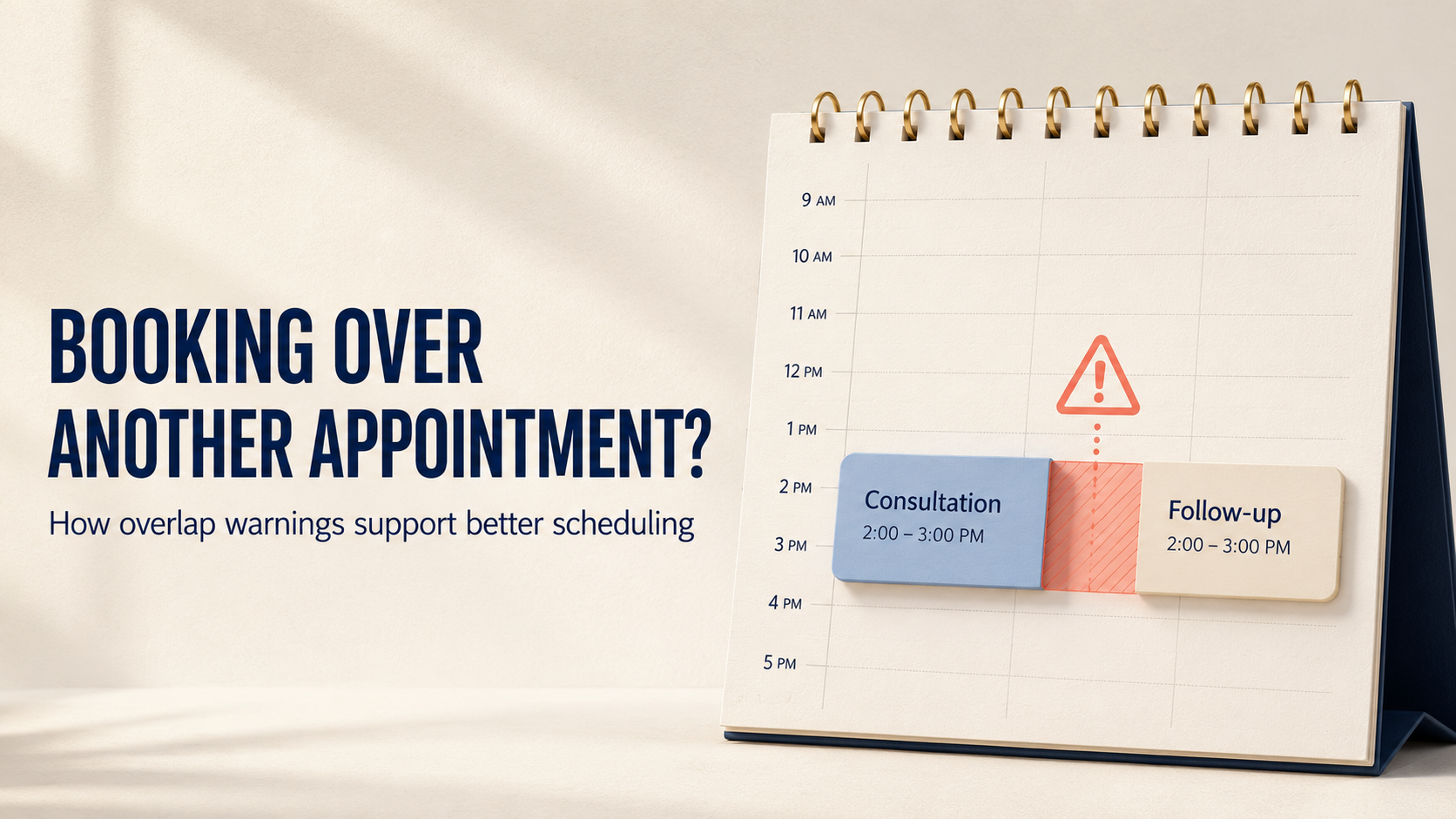
Booking Over Another Appointment? How Overlap Warnings Support Better Scheduling
Learn why appointment overlaps happen, how warning-and-override workflows support better decisions, and what teams should review before confirming a conflict.
.png)
How Many Business Tools Are Quietly Slowing Your Team Down?
Reduce manual handoffs, repeated data entry and disconnected workflows. Discover how connected business systems can help your teams work better together.
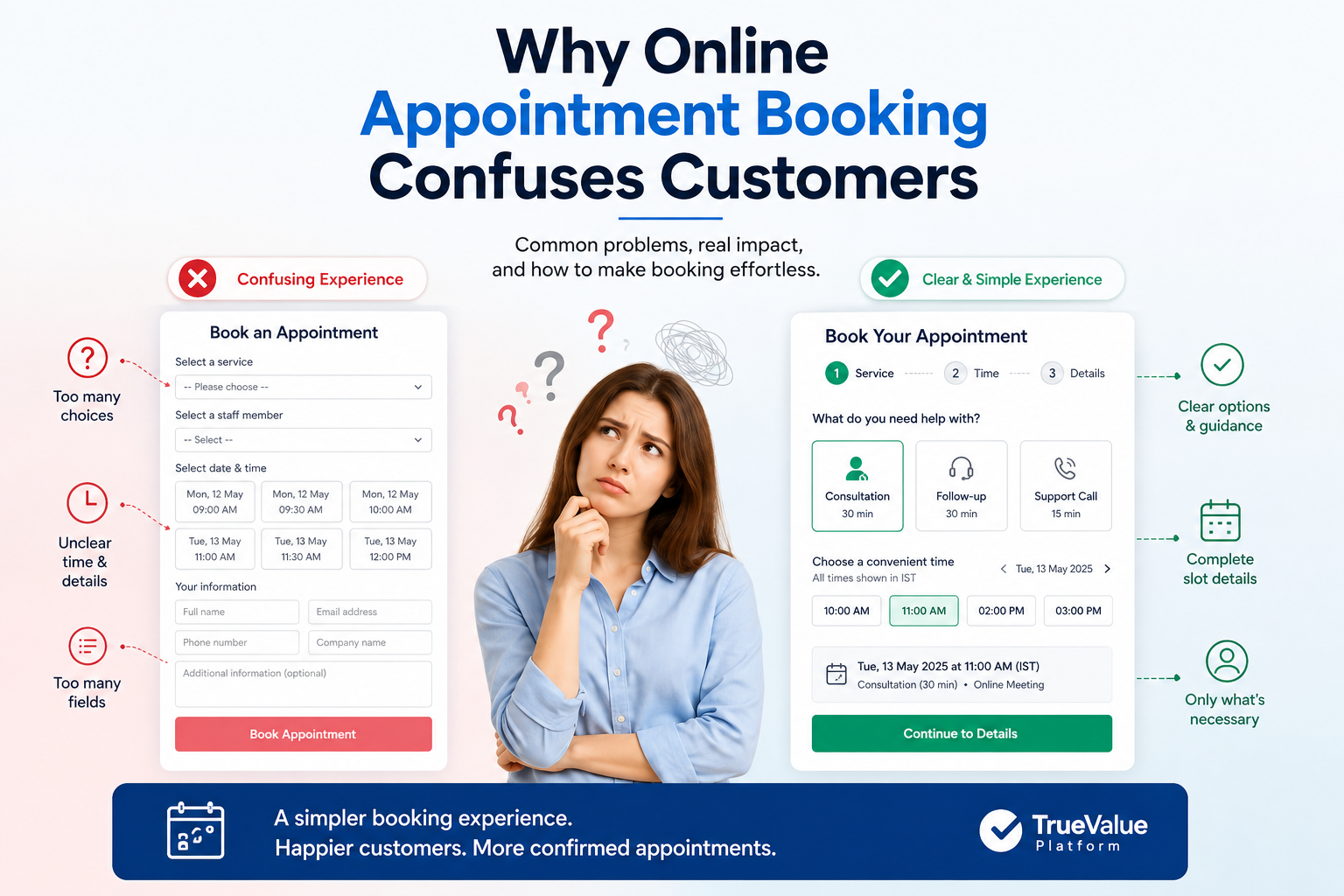
Why Online Appointment Booking Feels More Confusing Than It Should
Discover why online appointment booking confuses customers and how clearer options, forms, availability and confirmations improve the experience.