What Should Happen When Your Business Misses a Customer Call?
A missed customer call should not be the end of the conversation. Learn what should happen when the first person does not answer, how fallback routing should work and who should own the follow-up.
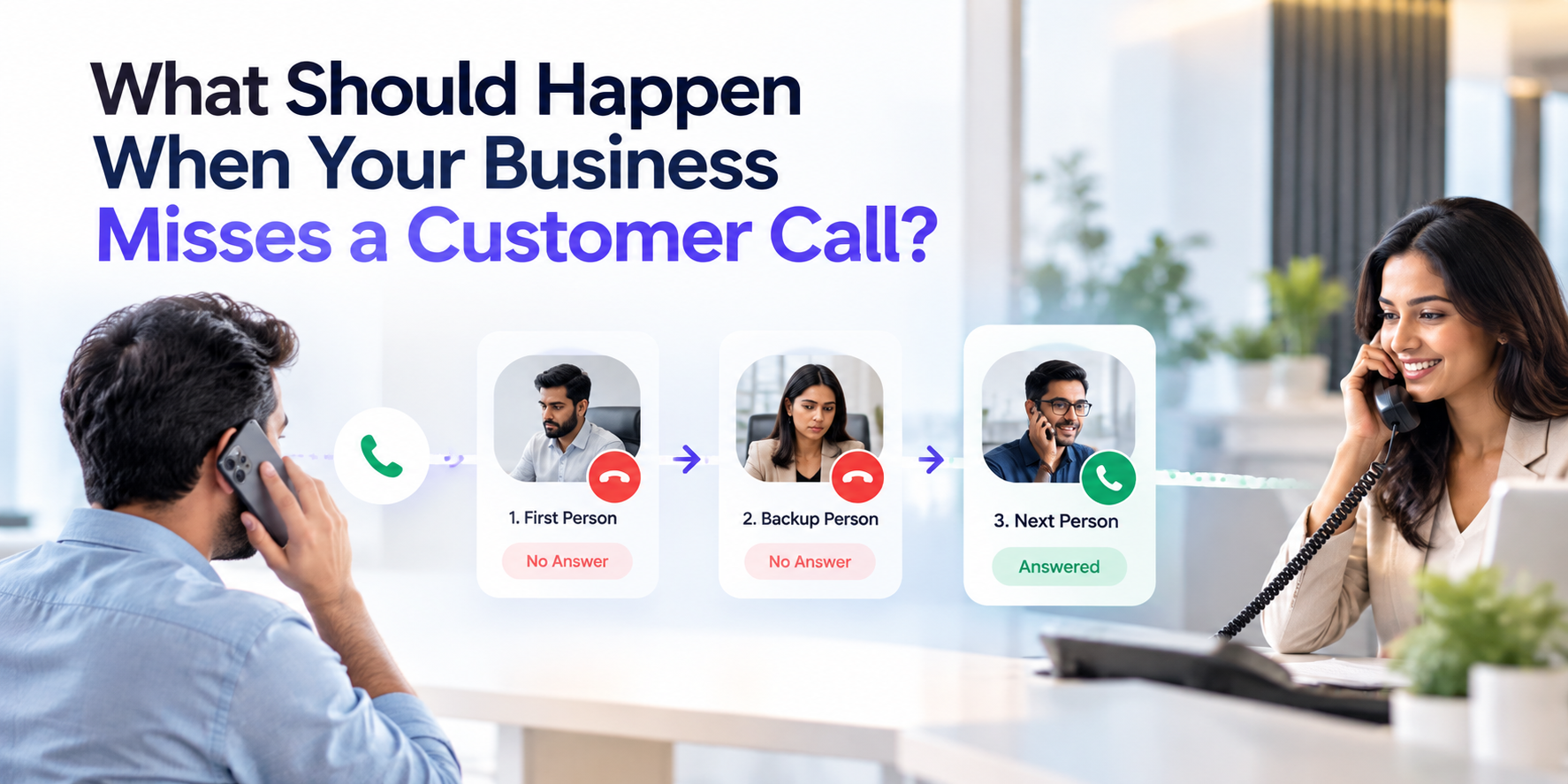
A customer calls your business.
The first person does not answer.
What happens next?
If the answer is simply:
“The call becomes missed.”
the call workflow ends too early.
A better business phone process decides what should happen before somebody misses the call: whether another person should ring, whether the call should enter a queue, whether an after-hours route should apply, and who is responsible for following up if nobody answers.
The principle is simple:
No answer should be a routing decision—not the end of the customer journey.
What Should Happen After the First Person Does Not Answer?
A practical missed-call workflow can look like this:
Incoming call → First destination → No answer → Backup destination → No answer → Final handling → Follow-up
For example:
Call stage | What should happen |
|---|---|
1. Call arrives | Route it to the appropriate first person or team |
2. First person is unavailable | Apply the predefined no-answer rule |
3. Backup person or team is tried | Give another appropriate employee a chance to answer |
4. Nobody answers | Use a defined fallback such as another queue, voicemail or approved handling path |
5. Call ends unanswered | Make the missed call visible for follow-up |
6. Follow-up begins | Give somebody responsibility for the callback or next action |
The specific route will differ between businesses.
What matters is that the route is decided before the customer calls.
Step 1: Route the Call to the Right Place First
A missed-call problem sometimes starts before anybody misses the call.
The incoming call may have been sent to the wrong person.
Consider a company where one employee receives almost every incoming call.
That employee may already be:
Speaking with another customer
Away from their desk
In a meeting
Handling another task
Unable to answer that particular enquiry
The problem is not necessarily that the employee is doing something wrong.
The problem may be that the business has made one person the only path into the company.
A better call workflow starts by asking:
Who should normally receive this type of call?
That could be an individual, department, branch or call queue depending on the business.
TrueValue Platform has a separate guide on this first part of the process:
A Customer Calls Your Business. Who Gets the Call? Read the TrueValue Platform call-routing guide
That article focuses on getting calls to the appropriate destination.
The next question is what happens when that destination cannot answer.
Step 2: Define What “No Answer” Actually Means
Business phone systems may report different call outcomes, depending on their provider and configuration. These can include busy, no-answer, failed connection or timeout conditions.
The customer might encounter:
No answer
Busy
Rejected call
Ring timeout
Nobody available in a queue
These outcomes may look identical to the caller—they did not speak to anybody—but they can require different handling internally.
For example, Twilio documents no-answer, busy, failed and other call outcomes and allows another action to be triggered after an unsuccessful forwarding attempt.
RingCentral similarly documents no-answer forwarding rules that can send calls to another extension, external number, voicemail or another defined destination.
The technology may differ.
The business decision is the same:
If the first destination does not answer, where should the call go next?
Step 3: Give the Call a Backup Route
A customer should not have to understand your staffing situation.
They simply want somebody who can help.
That is why a useful business call flow needs a defined fallback when the preferred destination cannot answer.
For example:
Customer calls → Person A rings → Person A unavailable → Person B rings
Or:
Customer calls → Sales queue → Nobody available → Backup team
Or:
Customer calls → Reception → No answer → Secondary extension
The important point is not how many people the call reaches.
It is whether each destination has a reason to be part of the route.
Randomly ringing every employee can create a different problem.
The goal is not:
“Make every phone ring until somebody picks up.”
The goal is:
“Give the call another sensible path when the first path fails.”
Call queues are commonly designed around this idea. RingCentral, for example, describes queues that connect callers to available team members and can route unanswered calls to an alternate destination after a configured waiting period.
Step 4: Decide How Long Each Person Should Ring
Routing is not only about who receives the call.
Timing matters too.
Consider this hypothetical sequential-ringing setup:
Person 1 rings for 40 seconds → Person 2 rings for 40 seconds → Person 3 rings for 40 seconds
The business may technically have a backup route.
The caller may still experience a very long wait.
On the other hand, switching destinations too quickly can give employees too little time to answer.
There is no universal ring time that fits every company.
Instead, test the workflow from the caller's perspective.
Ask:
How long does the complete journey take before someone answers—or the caller reaches the final fallback?
This is more useful than looking at each ring step individually.
Step 5: Have a Final Fallback When Nobody Answers
Eventually, the route needs to end somewhere.
If nobody is available, the business should decide what the caller experiences next.
Depending on the organisation and its phone setup, that might include:
Voicemail
Another team or extension
An answering service
A defined overflow destination
An after-hours message
A callback process
Modern business phone systems commonly provide overflow or no-answer handling rather than forcing an unanswered call to simply terminate. Zoom, for example, documents queue overflow rules, while RingCentral documents forwarding actions when no member answers or when a maximum wait is reached.
The important part is deciding this intentionally.
Do not let the customer's final experience be an accidental result of whatever default setting happens to exist.
What Should Happen After Hours?
An incoming call at 11:30 am should not necessarily follow the same route as a call at 11:30 pm.
Business hours should be part of the call-handling design.
An after-hours workflow might look like:
Incoming call → Business closed → After-hours message → Voicemail or approved destination → Follow-up queue for next working period
Some business telephony platforms support separate business-hours and after-hours routing rules. RingCentral's current call-handling documentation, for example, distinguishes between business-hours, after-hours and custom schedule rules.
Again, the exact configuration depends on the business.
The important principle is:
After-hours calls should have an intentional route too.
What Happens If Nobody Answers at All?
This is where the process moves from call routing to call recovery.
Suppose this happens:
Customer calls → Person 1 unavailable → Person 2 unavailable → final destination not answered
The customer may hang up.
Your workflow should not end there.
A missed-call process should make it possible for the team to answer questions such as:
Who called?
When did they call?
Which number or route did they call?
Was anyone attempted?
Has somebody called them back?
The last question is particularly important.
A call log can tell you:
“A call was missed.”
What the business actually needs to know is:
“Who is responsible for what happens next?”
A Missed Call Needs an Owner Too
Imagine three employees see the same missed call.
Employee A thinks:
“B will probably call them.”
Employee B thinks:
“Reception will handle it.”
Reception assumes:
“Sales must already know.”
Nobody calls.
The problem is no longer telephone routing.
It is ownership.
A missed call that requires action should have a clear next step.
For example:
Missed call
→ Assigned to sales representative→ Callback target: 2:00 pm, set by the team according to its response policy→ Outcome recorded after the call
The process does not need to be complicated.
It simply needs to answer:
Who owns the callback?
What Should Happen After the Customer Calls Back?
There is another common mistake.
The business focuses heavily on getting the call answered—but not on what happens after the conversation.
Suppose the caller finally reaches somebody.
They ask for a quotation.
The employee says:
“I'll send that this afternoon.”
Then the call ends.
If that promise exists only in the employee's memory, the call workflow is still incomplete.
A useful phone process therefore has two parts:
Before answer: Routing and availability
After answer: Context and follow-up
TrueValue Platform covers this second part in:
The Call Ended. What Happens Next? Turning Conversations Into Clear Follow-Up Read the post-call follow-up guide
Together, the two questions create a much more complete workflow:
Can the customer reach somebody?
and
Does the business know what needs to happen afterwards?
A Weak Missed-Call Workflow
Consider this scenario.
A potential customer calls because they want a quotation.
The receptionist is already speaking to somebody else.
The phone rings.
Nobody answers.
The customer hangs up.
Later, the receptionist notices the missed call but becomes busy again.
By the afternoon, nobody remembers whether somebody called the customer back.
The call log exists.
The process does not.
A Clearer Missed-Call Workflow
Now compare it with:
Customer calls
↓
Primary person or team rings
↓
No answer
↓
Backup destination rings
↓
Still no answer
↓
Defined fallback
↓
Missed call remains visible
↓
Callback owner assigned
↓
Customer contacted
↓
Outcome and next action recorded
The customer may still experience a missed call.
No system can guarantee that every call will always be answered.
The difference is that the business has decided what happens after each failure point.
Seven Questions to Ask About Your Current Phone Setup
You can test your current call workflow without changing any software.
Take one common incoming customer call and ask:
1. Who receives the call first?
Is that person actually the right first destination?
2. What happens if they are already on another call?
Does the caller have another path?
3. What happens if they simply do not answer?
Is there a defined no-answer rule?
4. Who receives the call second?
Is the backup destination capable of helping the customer?
5. How long does the caller wait?
Test the entire route rather than only one extension.
6. What happens after hours?
Does the customer receive an appropriate experience when the office is closed?
7. If everybody misses the call, who owns the callback?
If your team cannot answer this final question clearly, the missed-call workflow is incomplete.
Missed Calls Are an Operational Problem, Not Just a Phone Problem
A telephone system can ring extensions.
But the business still needs to decide:
Who should answer?
Who should answer next?
How long should each step last?
What happens outside business hours?
What happens if nobody answers?
Who follows up afterwards?
This is why call routing works best when it is treated as an operational workflow rather than simply a phone setting.
TrueValue Platform's PBX Product is designed for business telephony and call-routing operations.
You can also explore how PBX sits alongside the other purpose-built Products within TrueValue Platform. Explore TrueValue Platform Products
The objective is not to create the longest possible call route.
It is to create a clear one.
The Better Question Is Not “Did We Miss the Call?”
When managers review phone performance, the obvious question is:
“How many calls did we miss?”
A more useful operational question is:
“What happened after we missed them?”
Did another person get a chance to answer?
Did the call reach a sensible fallback?
Could the team see that the call was missed?
Did somebody own the callback?
Was the customer eventually contacted?
Those questions turn a missed call from a simple telephone event into a business process that can actually be improved.
If you want to explore how TrueValue Platform PBX could fit your business telephony and call-routing workflow:
Request a Demo with TrueValue Platform
Frequently Asked Questions
What should happen when a business misses a customer call?
The call should follow a predefined fallback route. That may involve another employee, queue, extension, voicemail or other approved destination. If nobody answers, the business should make the missed call visible and assign responsibility for any required callback.
What is no-answer call routing?
No-answer routing defines what happens when the first person or destination rings but does not answer within the configured period. The call can then be handled by another predefined destination instead of simply ending.
Should a business ring several employees when one person does not answer?
Sometimes, but the route should be intentional. The next employee or team should be able to handle the caller's likely need. Ringing unrelated employees only to increase the chance of an answer can create transfers and confusion.
What should happen to missed calls after business hours?
The business should define an after-hours route that reflects its operating model. This could include an announcement, voicemail, another approved destination or a callback process for the next working period.
Is voicemail enough for missed business calls?
Voicemail can be a useful fallback, but the business still needs a process for reviewing the message, assigning responsibility and completing the callback when action is required.
How can a business reduce missed customer calls?
Start by mapping who should answer each common call type, defining backup destinations, reviewing ring and wait times, establishing after-hours rules and making unanswered calls visible for follow-up.
Related Articles & Insights
Continue exploring connected workflows, product playbooks, and strategic guides.
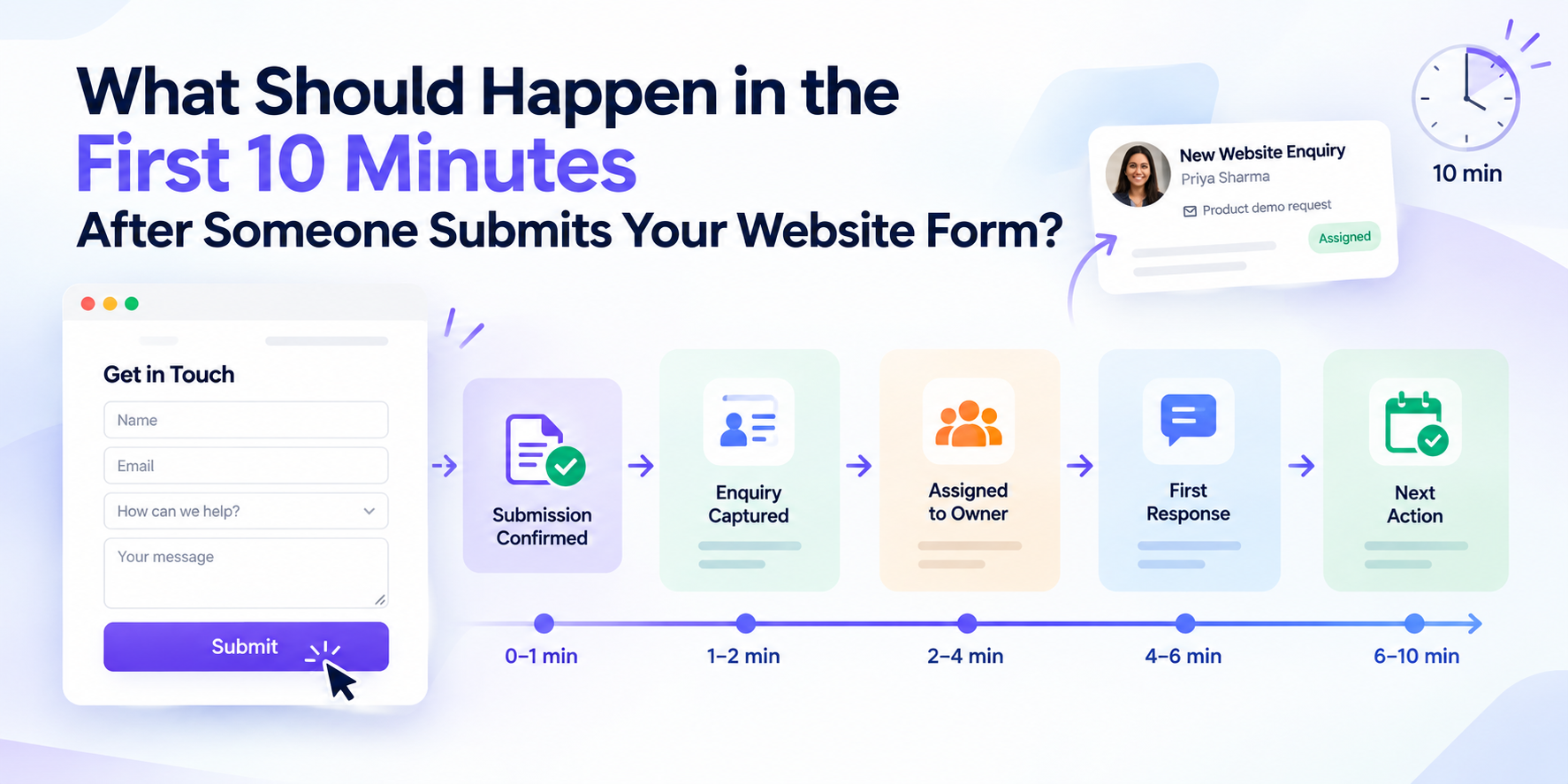
What Should Happen in the First 10 Minutes After Someone Submits Your Website Form?
A website form submission should trigger more than an email. See what should happen in the first 10 minutes—from confirmation and ownership to a meaningful response and clear next action.
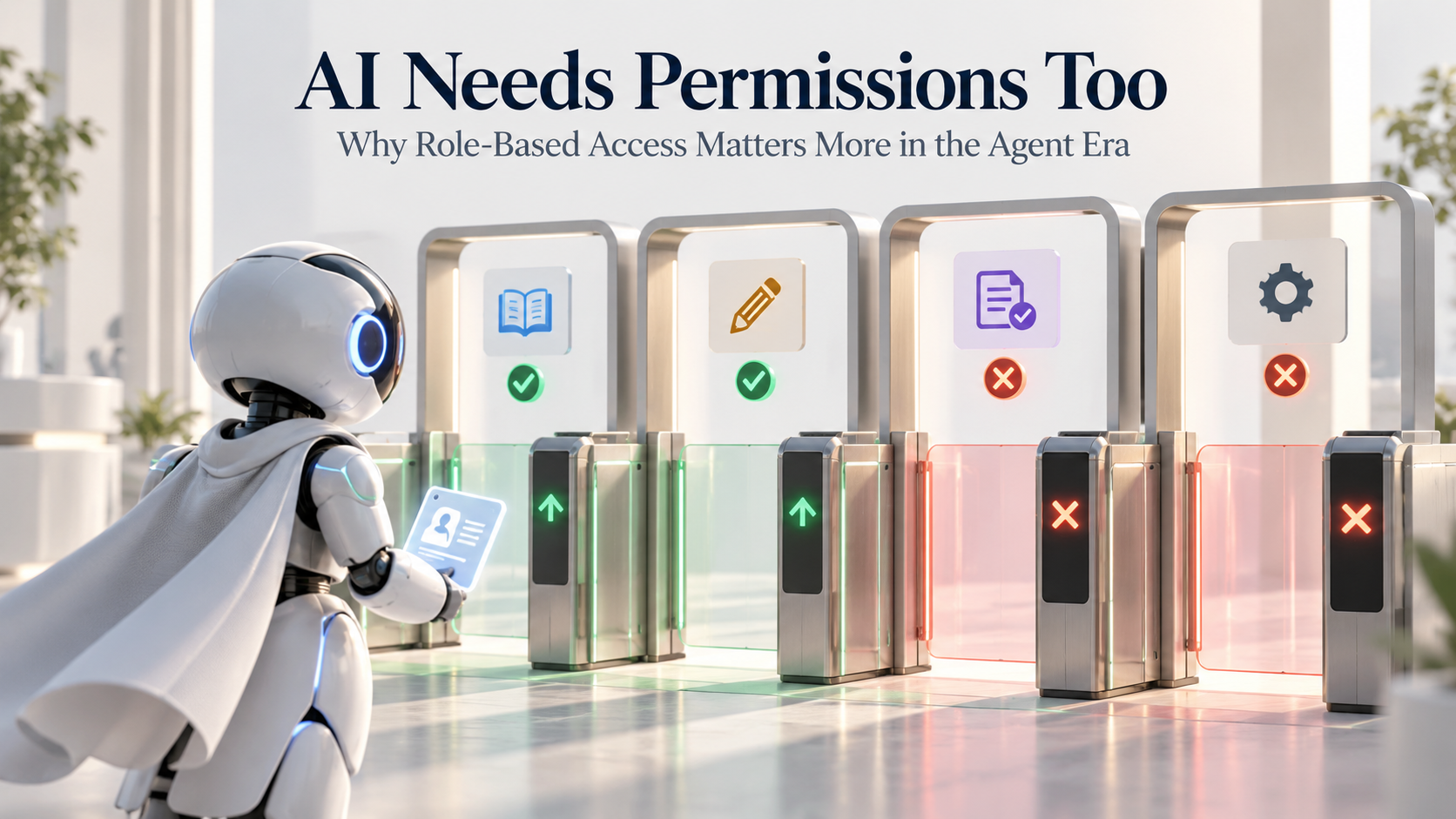
AI Needs Permissions Too: Why Role-Based Access Matters More in the Agent Era
As AI agents move from answering questions to taking action, businesses need clearer identity, permissions and approval boundaries. Learn why RBAC is becoming essential.
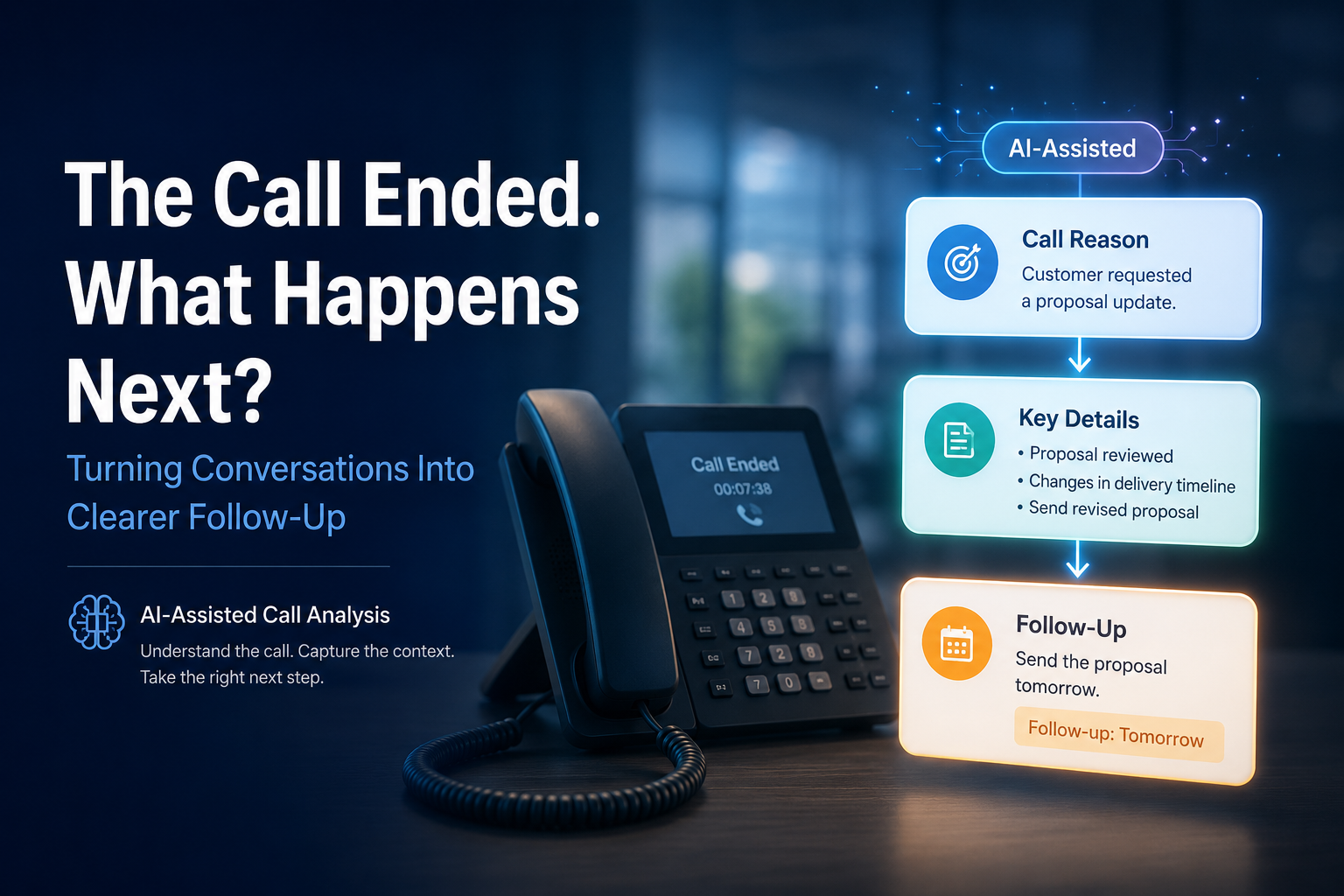
The Call Ended. What Happens Next? Turning Conversations Into Clear Follow-Up
A practical guide to turning completed business calls into clearer context by identifying the call reason, important details and the next follow-up action.