New Hire Announcements: How to Prepare the Team Before Day One
A practical guide to new hire announcements: what to include, when to send them, who should own the process, and how better pre-start communication supports onboarding.
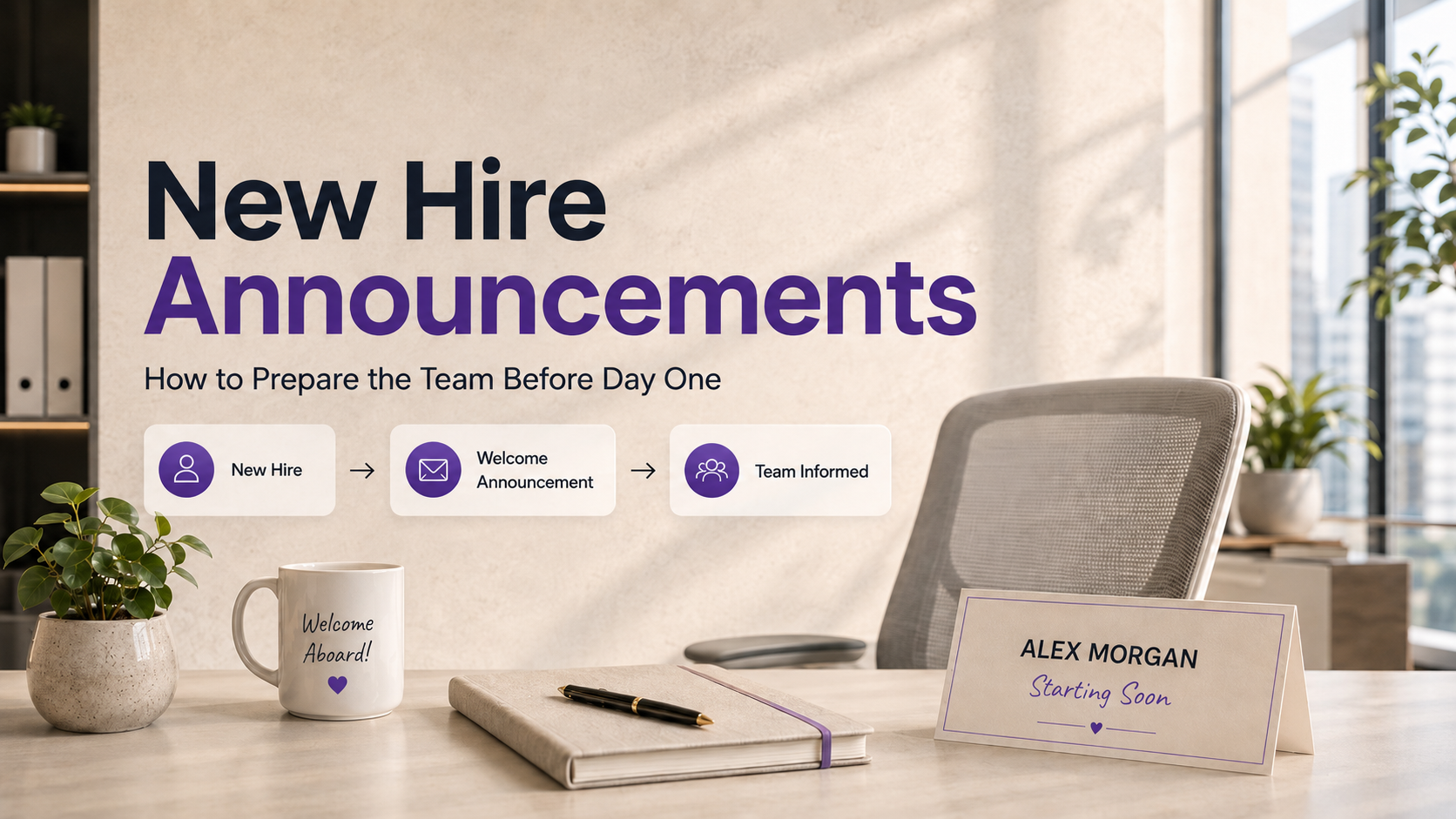
A new employee can have a signed contract, a prepared desk and a confirmed start date, yet still walk into an awkward first morning if the people around them do not know they are coming. Reception is surprised, the manager is busy and colleagues are unsure what the new person will be doing.
That is why a new hire announcement is more than a welcome message. It is a small but important onboarding handoff. Done well, it gives the right people enough information to prepare, welcome the employee and understand what happens next.
Why the New Hire Announcement Belongs in Onboarding
Employee onboarding starts before the first working day. Equipment, access, documents, introductions and the first-day schedule all require preparation, which is why a practical employee onboarding checklist should include communication with the team as a deliberate step.
The announcement connects preparation with people. It tells colleagues that someone is joining, gives context about the role and reduces avoidable first-day confusion.
A short pre-start announcement can prevent first-day uncertainty by telling colleagues who is joining, what their role is and when they start.
What Should a New Hire Announcement Include?
A useful announcement is short, accurate and relevant. Most teams only need:
the employee's name or preferred name;
job title and team or department;
confirmed start date;
manager or reporting contact, where useful;
a brief description of the role; and
a simple welcome or action for the receiving team.
Avoid turning the announcement into a detailed employee profile. Private contact details, home addresses, identification documents, salary information and other sensitive employment details do not belong in a routine team welcome message.
Personalised should mean relevant to the employee and role, not overly personal.
Use a Simple Pre-Start Communication Workflow
The easiest way to make announcements consistent is to treat them as a repeatable onboarding step rather than something HR remembers at the last minute.
A simple process can look like this:
New hire confirmed → employee details checked → manager reviews role context → relevant team informed → first-day introduction follows.
HR can maintain the process and message structure, while the hiring manager confirms the role context and audience. Confirm any optional personal detail with the employee before sharing it.
Send the message only after the joining details are confirmed, but early enough for colleagues to prepare. The exact timing can vary when hiring is confidential or start dates are still changing.
For remote employees, include the practical next step: which team channel they will join, whether there is a welcome meeting and who will make the first introduction.
Keep Employee Information Consistent
New hire communication becomes harder when HR, managers and team leads are working from different versions of the same employee information. A role may have changed after the offer stage, or the manager may have one start date while HR has another.
A structured employee overview can give authorised users a clearer starting point for role, department and employee context. The practical rule is simple: confirm the source of truth before writing the announcement rather than rebuilding employee details from email threads or chat messages.
Common New Hire Announcement Mistakes
The most common problems are usually process problems, not writing problems.
Sending it too late. If colleagues learn about the employee after they arrive, the message no longer helps the team prepare.
Sharing too much. Provide useful work context without exposing unnecessary personal information.
Giving no role context. “Please welcome Alex” is friendly, but it does not tell colleagues why Alex is joining or how they may work together.
Announcing before details are final. A changed start date, role or reporting line can create confusion.
Treating the message as the whole welcome. The announcement should support a real first-day introduction, not replace it.
Where TrueValue Platform HR Fits
The broader goal is not to add another isolated message to the hiring process. It is to make employee communication part of a structured journey from preparation to day one and beyond.
TrueValue Platform HR is a launched Product within the TrueValue Platform ecosystem. Teams reviewing how employee information and onboarding processes fit into connected business operations can also explore how connected business systems can reduce unnecessary manual handoffs between different parts of work.
Frequently Asked Questions
What is a new hire announcement?
A new hire announcement is a short internal message that tells relevant colleagues an employee is joining and provides the basic role and start-date context they need.
When should a new hire announcement be sent?
Send it after the joining details are confirmed and before the first day, leaving enough time for the relevant team to prepare.
Should the employee review the announcement?
Confirm any optional or personal information with the employee before sharing it, and check basic employment details for accuracy.
Make the Welcome Start Before Day One
A good first day is easier when the organisation has already prepared for the person who is arriving. Make the new hire announcement a defined onboarding step, confirm the information before sending it and give the receiving team enough context to welcome the employee properly.
For more practical preparation steps, use the employee onboarding checklist. If you want to explore how TrueValue Platform HR could fit into your organisation's employee operations, Request a Demo.
Related Articles
View all
CV Summary: Stop Reading Every CV From Line One
Learn how structured CV summaries can help recruiters identify relevant experience, skills and review points faster while keeping verification and human judgement central to hiring.
How to Reject a Candidate Professionally Without Damaging the Candidate Experience
Learn how to write clear, respectful candidate rejection emails, adapt messages to each hiring stage and use AI-assisted drafting without removing human judgement.

200 Applications. Which CV Should You Open First?
Candidate applications may arrive randomly, but your review order does not have to. See how Candidate Ranking can help recruiters organise applicants by relevant skills, experience and role fit for a clearer review process.