Your Website Keeps Growing. Does Your Content Process Keep Up?
As your website adds more forms, blogs, FAQs, careers and updates, learn how a clearer organise, review and maintain process can keep website work manageable.
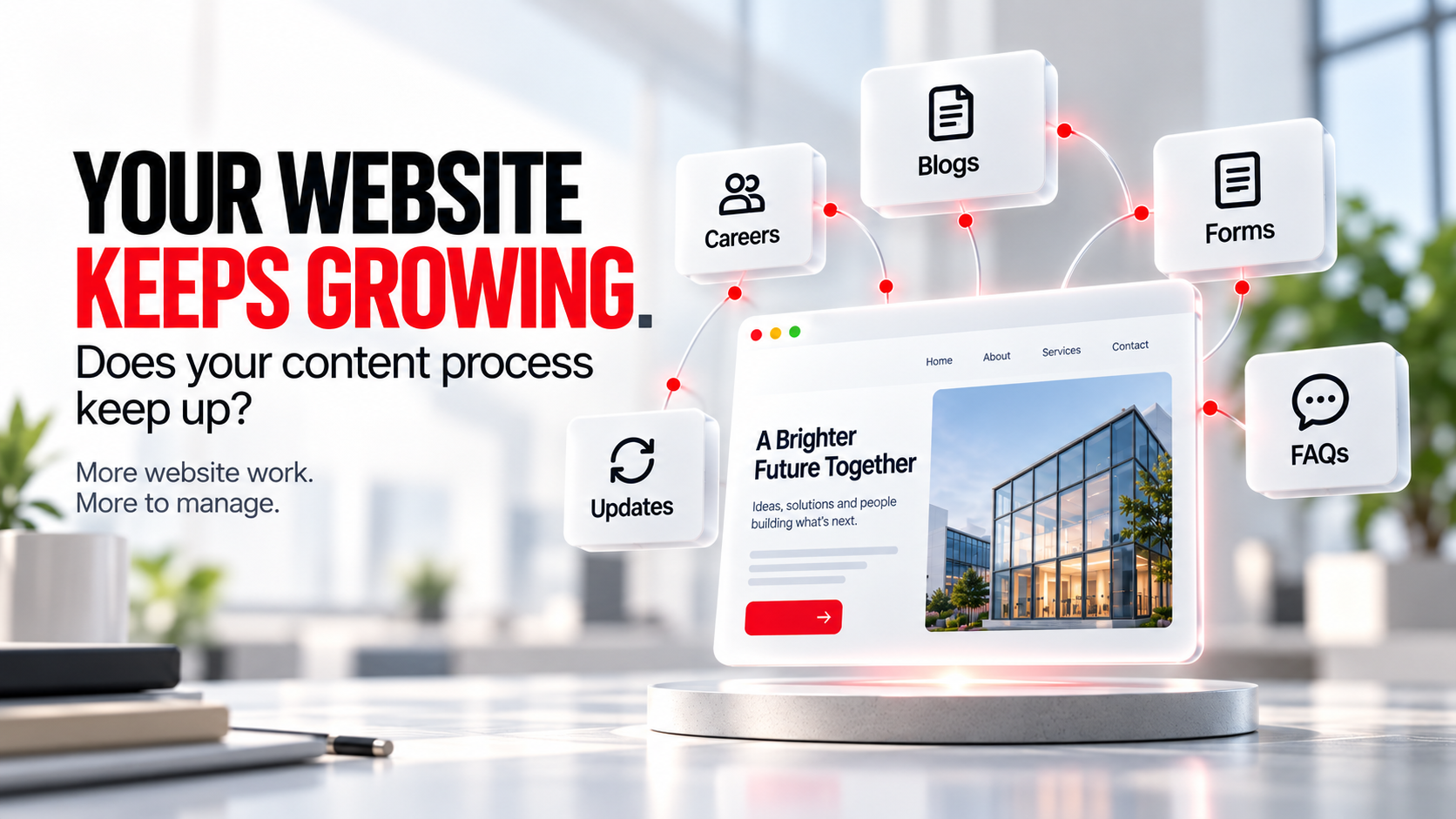
A website rarely becomes difficult to manage overnight. It becomes difficult one addition at a time: another service page, form, FAQ, job opening, blog or update.
Each item may be manageable on its own. The problem appears when the website grows faster than the process behind it. People start asking who owns an update, whether a page was reviewed, which version is current, or what should happen after a form is submitted.
A growing website therefore needs more than more content. It needs a clear process for organising, reviewing and maintaining website work.
Why website growth creates operational complexity
Early-stage websites are often simple. A small team can keep track of a few pages and make changes when needed. As the business grows, the website starts serving more purposes.
It may publish articles, answer recurring questions, collect enquiries, advertise vacancies, support campaigns and keep business information current. More people become involved and more types of work must be coordinated.
The risk is not simply having “too much content”. The risk is losing clarity around three questions:
What needs attention?
Who should review it?
How do we know it is still accurate after publication?
When those answers live in inboxes, chat messages, spreadsheets or one person’s memory, routine website work becomes harder to track. This resembles the wider problem of disconnected business systems: the work exists, but the handoffs create friction.
Treat website content as ongoing operations
Publishing is only one stage of website work. A useful process considers what happens before and after something goes live.
Imagine a new service page. Someone drafts the copy. A manager checks the offer. Marketing reviews the wording. The page is published. Three months later, the service changes—but nobody is clearly responsible for revisiting the page.
The page is live, yet the process is incomplete.
The same issue can affect blogs, forms, FAQs, career listings and general updates. Each item has a lifecycle: create, review, publish, maintain and eventually revise or remove.
Thinking in lifecycles changes the question from “Can we publish this?” to “How will we manage this after publication?”
Use a simple Organise → Review → Maintain workflow
A practical website process does not need to be complicated. Start with three stages.
1. Organise
Group website work by type and priority. Separate urgent corrections from planned content, campaign work and routine maintenance. Make ownership visible so each item has someone responsible for moving it forward.
2. Review
Define what must be checked before publication. Depending on the item, that may include factual accuracy, spelling, brand consistency, links, form behaviour, dates, contact details and the action expected from the visitor.
3. Maintain
Publication should create a future responsibility, not end one. Important pages need periodic checks. Job listings should close when roles are filled. FAQs need updating when policies change, and forms should still lead to the correct next step.
Maintenance is where otherwise well-managed websites often become inconsistent over time.
A quick website-operations check for growing teams
Review your current process and ask:
Can we see important website work in one clear place?
Does each item have an owner?
Is there a defined review step before publication?
Can we distinguish draft, review and published work easily?
Do we know which pages or content need future maintenance?
When a visitor submits a form, is the next business action clear?
If several answers are “no”, the problem may not be the website itself. The process around the website may simply need to mature with it.
Where TrueValue Platform Site Flow fits
TrueValue Platform Site Flow is a launched Product positioned around website and content operations, including areas such as forms and submissions, content and blog workflows, and connected website processes. The broader idea is to give growing website work a clearer operational structure instead of treating every update as an isolated task.
You can explore the current TrueValue Platform Product ecosystem to understand how Site Flow sits alongside other purpose-built Products. Site Flow’s approved public acquisition path is Request a Demo.
Frequently asked questions
When does a business need a more structured website process?
Usually when more pages, contributors, forms, campaigns or updates make it difficult to see ownership, status or what needs attention next.
Is a content calendar enough?
A calendar helps schedule publishing, but it may not cover review, ownership, form follow-up or long-term maintenance. Those operational steps need their own clarity.
What should be reviewed before website content goes live?
At minimum, check accuracy, links, dates, contact details, brand fit and the next action expected from the visitor. Add specialist review where the topic requires it.
A bigger website needs a clearer process
Growth should not make website work harder to understand. As the number of pages, forms, blogs, FAQs, careers and updates increases, the process behind them should become more visible and repeatable.
Organise the work. Review it before it goes live. Maintain it after publication.
If you want to discuss how Site Flow could fit your website operations, Request a Demo with TrueValue Platform.