Google AI Overviews Are Changing Website Discovery. Is Your Content Ready?
Learn how to prepare useful, original and technically accessible website content for Google AI Overviews without abandoning proven SEO practices.
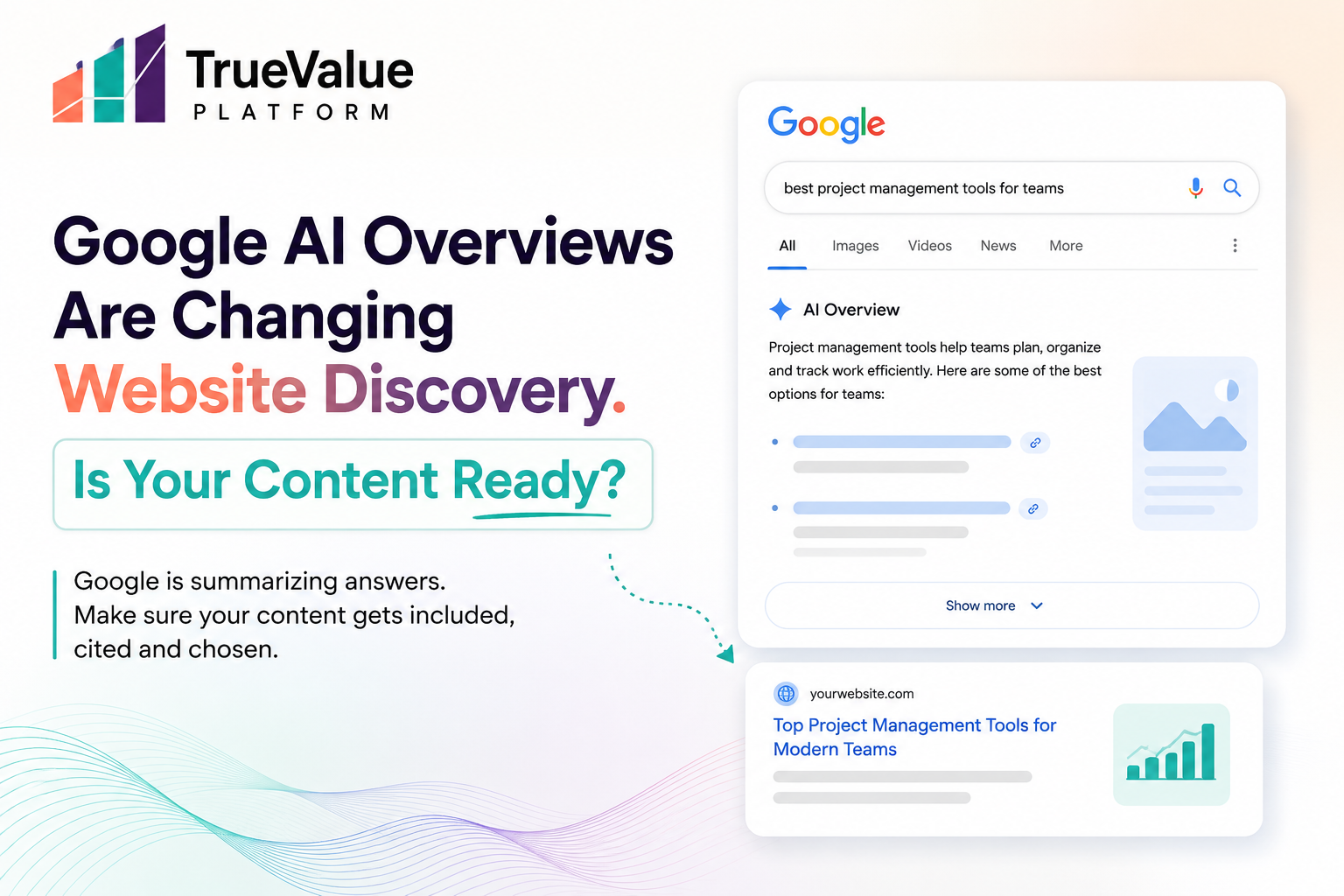
A marketing manager opens the monthly website report and notices something uncomfortable.
Search impressions remain steady. Important pages still appear in Google. Yet fewer people seem to be following the familiar journey from search result to website.
The immediate conclusion is often: “Our SEO is failing.”
That may not be the complete story.
Google AI Overviews can provide generated responses for selected searches and show links to supporting web pages. This means part of a customer’s research may now happen before they visit an individual website. Google also confirms that established SEO practices continue to apply to its AI search features and that no separate AI Overview markup is required.
In Short
Businesses do not need a separate optimisation system for Google AI Overviews. Continue using sound SEO, publish original and useful content, make pages technically accessible, support important claims and give readers a clear next step.
For Google Search, AEO and GEO do not replace SEO. The same content-quality and technical foundations continue to apply.
How Is Website Discovery Changing?
For years, website discovery followed a predictable path:
Someone entered a search query.
Google displayed a list of links.
The person opened several websites.
They compared the available information.
They contacted one business.
AI-supported search can compress part of that journey.
Someone researching website content software might ask:
How should a business manage blogs and website forms?
What is the difference between SEO, AEO and GEO?
Which website content helps customers make decisions?
How can a small marketing team maintain useful content?
A generated response may organise part of the answer and provide supporting links before the person decides which website to visit.
Your content therefore has two jobs: contribute useful information during discovery and reward the reader when they choose to visit.
Why Generic Content Is Becoming Weaker
Imagine two companies publishing articles about website enquiries.
The first publishes “Five Benefits of Website Forms”. It says forms save time, collect customer details and improve communication.
The second publishes “Why Website Enquiries Go Unanswered After Form Submission”. It explains what happens when submissions enter a shared inbox, ownership is unclear and follow-up processes are inconsistent.
Both pages may use relevant keywords. Only the second describes a recognisable operational problem.
Generic content is less likely to stand out when many sources provide substantially the same information.
Google recommends original, useful and non-commodity content that contributes first-hand knowledge, experience or a distinctive point of view. It specifically advises publishers not to recycle information that could easily have been produced from existing web content.
How Can You Prepare Content for SEO, AEO and GEO?
Answer the Main Question Early
Do not hide the answer behind a long introduction.
Give readers a concise response near the beginning. Then expand it with context, examples, supporting evidence and practical recommendations.
This helps visitors confirm that the page matches their needs and makes the page’s purpose easier to understand.
Publish First-Hand Business Knowledge
Your strongest content ideas may already exist inside your business.
Look for:
Questions customers repeatedly ask
Objections raised during sales conversations
Common implementation mistakes
Problems reported to support teams
Decisions customers find difficult
Processes people frequently misunderstand
“How to improve website conversions” is broad.
“Why consultation requests disappear between your website and sales team” creates room for a more useful explanation.
Use Clear, Focused Headings
Each section should answer one connected question.
Instead of:
More Information
Use:
Why Do Website Enquiries Go Unanswered?
Clear headings help people scan the article and understand how each section relates to the main topic.
Demonstrate Who Created the Content
Readers should be able to identify who wrote or reviewed the article and why that person is qualified to discuss the subject.
Include:
A named author
A relevant author biography
A publication date
A modified date
Credible sources
Original examples or observations
Google recommends making the “who, how and why” behind content clear, particularly when readers need to assess its reliability.
Maintain a Sound Technical Foundation
Useful content can still remain undiscovered when the page is difficult to crawl, index or navigate.
Before publishing, confirm that:
Googlebot is not blocked
The page returns a successful status code
The content is indexable
Internal links are crawlable
Anchor text describes the destination
Images include descriptive alt text
The canonical URL is correct
The page works properly on mobile devices
Pages must meet Google’s technical requirements and be eligible to appear in Search before they can be considered for generative search features.
Give Readers a Clear Next Step
Appearing in an AI-supported result is not the final business outcome.
Once someone reaches the website, the page should quickly answer:
Does this business understand my problem?
Is the information credible?
What should I do next?
The next step could be reading a related guide, completing a form, requesting information or exploring a relevant Product.
Can Businesses Use AI-Assisted Content?
Using generative AI to support content production is not automatically prohibited.
The risk appears when businesses generate large numbers of low-value pages primarily to manipulate rankings. Google states that scaled publishing without added value may violate its spam policies. Human review, factual accuracy, original insight and reader value therefore remain essential.
A Practical Content-Readiness Checklist
Before publishing, ask:
Does the page answer a real customer question?
Is the main answer visible near the beginning?
Does the article offer something beyond general knowledge?
Are important claims supported?
Is a credible author identified?
Are the headings descriptive?
Are internal links relevant and crawlable?
Is there one logical next step?
Can the article be updated as the topic changes?
Following this checklist cannot guarantee inclusion in an AI Overview. Google does not provide a special optimisation shortcut or markup that guarantees inclusion.
Frequently Asked Questions
Does Traditional SEO Still Matter for Google AI Overviews?
Yes. Google says its generative search features are rooted in its core Search ranking and quality systems. Crawlability, indexing, content quality, internal links and page experience remain important.
Do Businesses Need Separate SEO, AEO and GEO Strategies?
Not for Google Search. AEO and GEO can describe a focus on answer-based or generative discovery, but they do not replace the foundations of SEO.
A strong page can support all three by answering the main question clearly, contributing original knowledge and maintaining a sound technical structure.
Is Special Structured Data Required for AI Overviews?
No. Google does not require special structured data for AI Overviews or AI Mode. Relevant structured data should still be used when it accurately represents visible page content.
Turn Content Readiness Into a Repeatable Process
Preparing one article is manageable. Keeping blogs, FAQs, forms, submissions and website information accurate becomes harder when those activities are managed through disconnected processes.
Site Flow is an Early Access Product from TrueValue Platform. Its approved scope includes website forms, submissions, blogs, testimonials, FAQs, newsletters, chatbot, analytics and SEO tools.
Site Flow is designed to give teams a more structured way to manage website content and incoming submissions within the connected TrueValue Platform Product ecosystem.
Access is available to selected users and may depend on availability, requirements and scope.
The future of website discovery will not be won by publishing the highest number of articles. It will favour businesses that explain real problems clearly, contribute useful knowledge and make the next step easy.Ready to manage website content and submissions more systematically? Explore more on TrueValue Platform.Sources
Google Search Central, AI features and your website.
Google Search Central, Optimising your website for generative AI features on Google Search.
Google Search Central, Creating helpful, reliable, people-first content.
Google Search Central, Guidance on generative AI content on your website.
Google Search Central, Google Search technical requirements.
Google Search Central, SEO link best practices.
Google Search Central, Article structured data.
Related Articles & Insights
Continue exploring connected workflows, product playbooks, and strategic guides.
How to Build a Blog Content Calendar Your Team Can Actually Follow
Build a practical blog content calendar that helps your team plan ideas, manage content workflows and publish useful content consistently.
.png)
How Many Business Tools Are Quietly Slowing Your Team Down?
Reduce manual handoffs, repeated data entry and disconnected workflows. Discover how connected business systems can help your teams work better together.
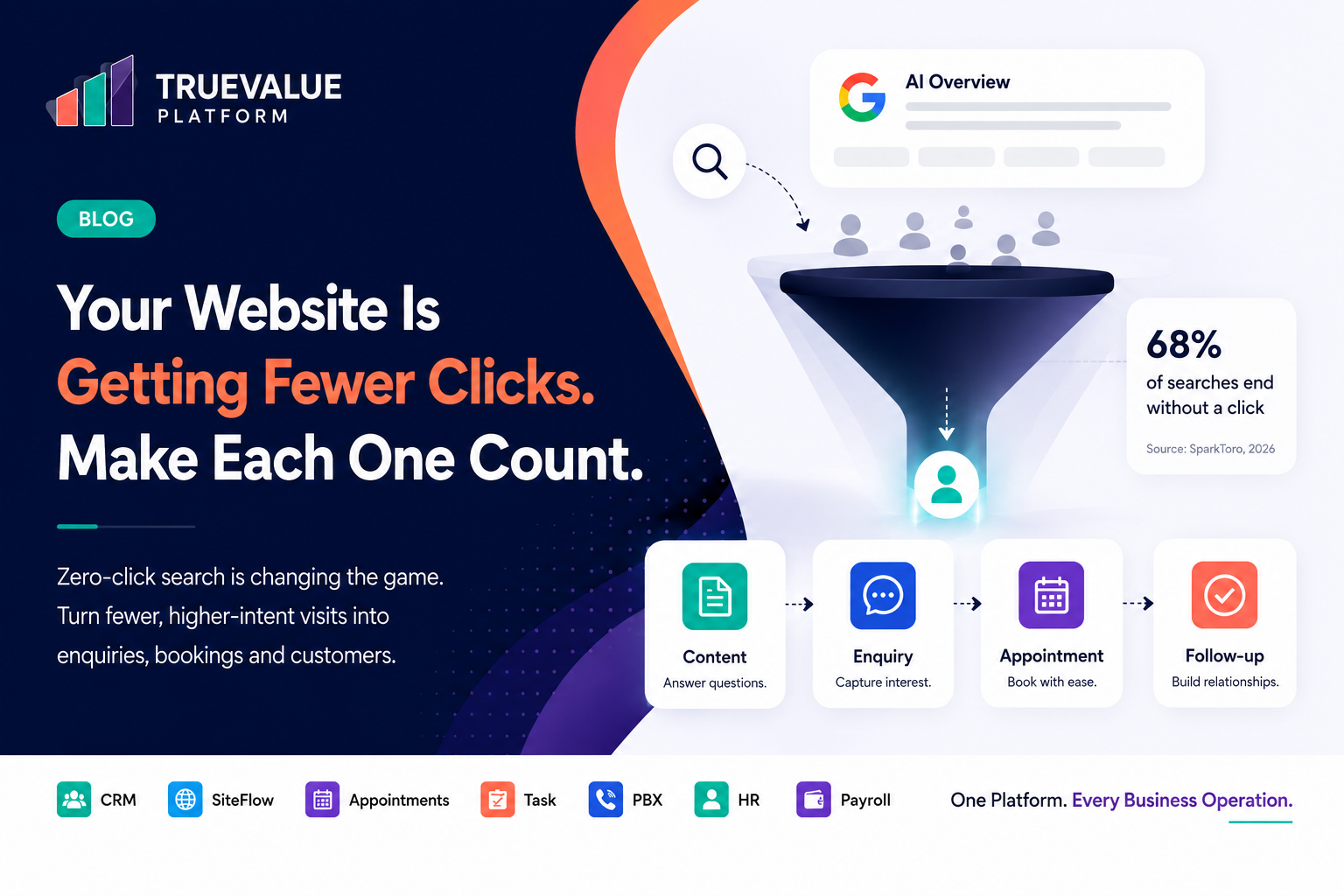
Your Website Is Getting Fewer Clicks. Make Each Visit Count.
Zero-click search is changing website traffic. Learn how to turn fewer, higher-intent visits into connected enquiries and customer journeys.