A Customer Calls Your Business. Who Gets the Call?
Learn how business call routing helps direct incoming calls towards the right team, reduce unnecessary transfers and create clearer customer communication workflows.

A customer calls your business with a simple question.
They may want a quote, technical support, an appointment, an order update or help with an existing account. But before anyone can solve the customer’s problem, another decision has to happen:
Who should receive the call?
In a small business, the answer may be obvious. One receptionist answers every call and transfers it manually. As the business grows, however, that approach becomes harder to manage. More departments, branches, employees and call volumes create more opportunities for customers to be transferred incorrectly, kept waiting or asked to call again.
That is why business call routing should be treated as an operational workflow rather than simply a telephone setting.
What Is Business Call Routing?
Business call routing is the process of directing incoming calls to the appropriate person, team, extension, group or queue based on the organisation's routing rules.
Instead of every call reaching the same person, a routing structure can direct different calls towards suitable extensions, groups or queues depending on how the organisation handles enquiries.
A typical flow might look like:
Incoming call → routing rule → relevant team → available employee
For example, a business might separate calls between:
Sales
Customer support
Accounts
Existing customers
New enquiries
Different branches
The important point is not to create the most complicated phone menu possible. It is to reduce unnecessary movement between the customer and the person who can actually help.
TrueValue Platform’s PBX Product supports business telephony operations including extensions, number routing, inbound routes, schedules, IVR and other call-management controls.
Why Poor Call Routing Becomes a Business Problem
A missed or badly routed call does not always look serious internally.
The customer experiences it differently.
Imagine someone calling about a purchase. The first employee answers but cannot help. They transfer the customer to sales. Sales discovers it is actually a support enquiry. The customer is transferred again.
Technically, the call was answered.
Operationally, the experience was poor.
This is similar to other fragmented customer processes. When ownership is unclear, teams spend more time discovering who should act than completing the action itself. The same principle appears in customer follow-up processes: visibility and ownership matter as much as simply collecting information.
Good routing therefore answers three questions quickly:
Why is the customer calling?
Which team owns that type of enquiry?
Who is available to handle it?
Build the Call Flow Around Customer Intent
One common mistake is designing the telephone system around the company’s organisational chart.
Customers do not always understand your internal departments.
They understand their problem.
Instead of asking callers to choose between unfamiliar department names, design options around recognisable needs.
For example:
Press 1 for a new sales enquiry.Press 2 for help with an existing order.Press 3 for accounts and billing.
This makes the routing decision easier because the customer is identifying their intention rather than trying to understand how your company is structured.
An IVR can help organise this first layer of routing, while extensions, groups and queues can determine what happens afterwards.
Ring Groups and Queues Solve Different Problems
Two routing ideas are especially useful to understand.
A ring group allows a call to reach a defined group of people. This can work well when several employees are capable of handling the same type of enquiry.
A call queue becomes useful when several callers may be waiting for a smaller number of available employees.
The right choice depends on the workflow.
If three salespeople can answer any new enquiry, a group-based approach may make sense.
If a support team regularly handles many incoming calls simultaneously, queue-based handling may provide a more structured experience.
The technology matters, but the underlying business rule matters more:
Who is responsible when the preferred employee is unavailable?
Without an answer to that question, even sophisticated routing can still create dead ends.
Availability Should Be Part of the Routing Design
Your ideal call flow at 11:00 AM may not make sense at 7:00 PM.
Businesses should therefore think about:
operating hours;
employee availability;
lunch or shift coverage;
branch schedules;
overflow handling;
unanswered calls;
escalation routes.
A useful routing map should include the normal route and the fallback route.
For example:
Sales call → Sales team → no answer → secondary group or queue
That fallback is important because a route that only works when everybody is available is not a complete workflow.
TrueValue PBX includes routing, extensions, queues and availability-oriented call controls within its telephony Product. You can explore the wider TrueValue Platform Product ecosystem to understand how PBX sits alongside other operational Products.
Use the Five-Call Test
You can evaluate your existing system without buying anything or rebuilding your entire phone setup.
Choose five common reasons customers call.
For each one, ask:
Who should answer first?
What happens if that person is unavailable?
How many transfers would the customer normally experience?
Can another authorised employee handle the call?
Can the business review what happened afterwards?
If your team cannot answer these questions clearly, your main problem may not be telephone technology.
It may be an undefined call workflow.
This is also worth considering when comparing business software. Evaluate the entire workflow rather than selecting software because it has the longest feature list.
Frequently Asked Questions
What is the main purpose of call routing?
The purpose is to move an incoming caller towards the appropriate destination with as little unnecessary waiting, transferring and internal searching as practical.
Does every business need an IVR?
No. A small company with one call type may need very little routing. IVR becomes more useful when callers have several clearly different reasons for contacting the business.
What should happen when nobody answers?
Define the fallback before launching the route. Depending on the business process, that may involve another extension, group, queue or other approved handling path.
Is call routing only useful for large companies?
No. Even smaller businesses can benefit when several employees, departments or branches share incoming calls.
What does TrueValue Platform PBX support?
TrueValue Platform PBX is designed for business telephony and call-routing workflows, including extensions, routing, queues and call visibility. Specific capabilities and configuration depend on the business setup.
The Better Question Is Not “Who Can Answer?”
When a customer calls, getting someone to pick up the telephone is only the first step.
The more useful question is:
Can the call reach the person or team most capable of handling it?
Mapping customer intent, ownership, availability and fallback routes gives your business a clearer call workflow before technology is even configured.
TrueValue Platform PBX is a launched Product under the current approved Product catalogue, with Request a Demo as its public acquisition CTA.
If you want to explore how PBX call routing could fit your business workflow, Request a Demo.
Related Articles & Insights
Continue exploring connected workflows, product playbooks, and strategic guides.

What Should Happen When Your Business Misses a Customer Call?
A missed customer call should not be the end of the conversation. Learn what should happen when the first person does not answer, how fallback routing should work and who should own the follow-up.
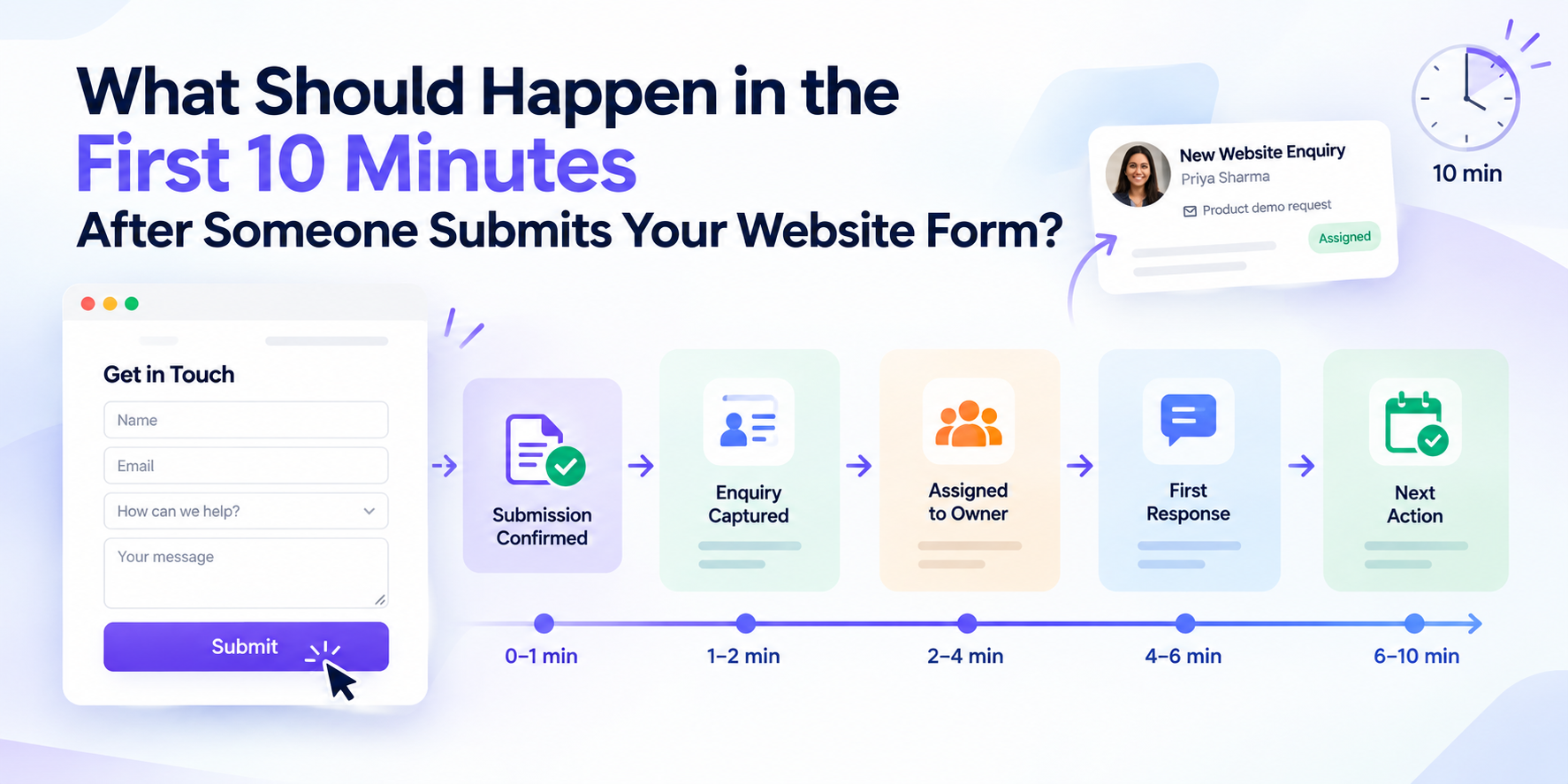
What Should Happen in the First 10 Minutes After Someone Submits Your Website Form?
A website form submission should trigger more than an email. See what should happen in the first 10 minutes—from confirmation and ownership to a meaningful response and clear next action.

Dashboard Sprawl in 2026: Why More Reporting Can Make Decisions Slower
More dashboards do not always create better decisions. Learn how dashboard sprawl creates reporting friction and how to move from visibility to action.