Why Work Gets Delayed When Task Ownership Is Unclear
Learn why unclear task ownership slows decisions, weakens handovers and delays work, plus a practical framework for clearer responsibility today.
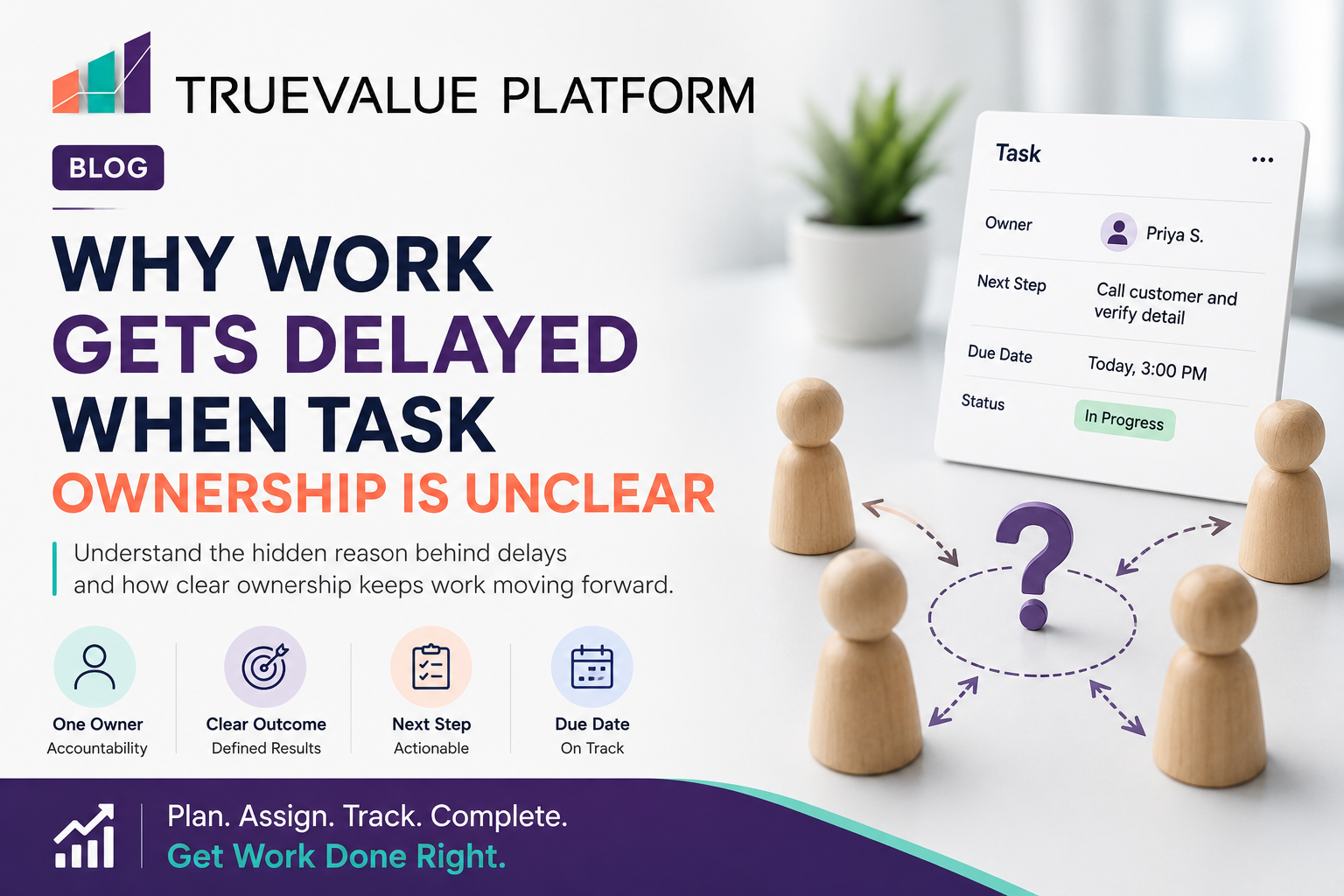
Work gets delayed when task ownership is unclear because nobody knows who must take the next action, make the decision or confirm completion. People may discuss the work and assume someone else is handling it, but the task remains inactive.
Clear ownership means naming one accountable person, defining the expected outcome and setting a visible next step and due date.
The meeting ended. The work did not begin.
A team meeting finishes with: “Let’s get the customer issue sorted today.”
Support thinks operations will investigate it. Operations expects the account manager to contact the customer. The account manager assumes support is already replying.
By the afternoon, several people know about the issue, but nobody has moved it forward.
The delay is not always caused by laziness or lack of skill. Often, responsibility was shared so widely that it belonged to no one.
What unclear ownership looks like
Unclear ownership often appears in ordinary phrases:
“We should check this.”
“Can someone follow up?”
“The team will handle it.”
These statements describe an intention, not an assignment. They do not identify who acts first, what “done” means or when the work should be completed.
A task can involve contributors, reviewers and stakeholders. However, it still needs one clearly named owner responsible for moving it to the next stage.
“Everyone is responsible” may sound collaborative, but it makes accountability harder to see.
How unclear responsibility creates delays
First, it creates an action gap. The team agrees something matters, yet no individual receives a specific next step.
Second, it can create duplicated effort. Two people may start the same work because neither can see what the other is doing.
Third, it slows decisions. Questions remain unanswered because nobody knows who can choose a direction.
It also weakens handovers. A task may move from sales to operations without a clear acceptance point. The first team believes it has handed the work over; the second does not realise it now owns the next action.
Without a visible owner, due date and status, work can look active in conversation while remaining untouched in practice.
A practical method: one owner, one outcome, one next step
Use this five-part check whenever work is created or handed over:
One owner: Name the person accountable for moving the task forward.
One outcome: Describe what completion looks like.
One next step: State the first action.
One due date: Set a realistic deadline.
One handover rule: The new owner acknowledges any transfer of responsibility.
The earlier customer issue could become:
Owner: PriyaOutcome: Customer receives a confirmed resolutionNext step: Call the customer and verify the missing detailDue: 3:00 pm todayContributors: Operations checks the record; support prepares the reply
Now everyone can see who drives the work, who supports it and what must happen next.
Where work management helps
A shared work-management process helps preserve ownership after a meeting ends.
The Task Product in TrueValue Platform is designed to help teams organise work, assign responsibilities and track progress. Its code-observed capabilities include assignees, due dates, comments, checklists, history, dependencies, notifications, workload views and multiple task views.
A task system does not replace good management or decide ownership for the team. It can make the agreed owner, deadline, context and progress visible, reducing the chance that responsibility disappears inside messages or meeting notes.
Teams can also explore the wider TrueValue Platform Product ecosystem and learn more about TrueValue Platform.
Many people may help with a task, but one person should always be able to say:
“I am responsible for moving this forward.”
Related questions
Why is one task owner better than several owners?
One owner creates a clear point of accountability. Other people can still contribute, review or approve without creating confusion about who moves the task forward.
Can task ownership change during a project?
Yes. Ownership can change when work moves between teams, but the handover should be explicit and acknowledged by the new owner.
What should a task include besides an assignee?
Include the expected outcome, next step, due date, relevant context, dependencies and any required reviewer or approver.
How can managers spot unclear ownership early?
Look for work discussed repeatedly without a named owner, visible deadline or recent action. It may be active in conversation but inactive in execution.
Related Articles & Insights
Continue exploring connected workflows, product playbooks, and strategic guides.

The Real AI Transformation Is Workflow Redesign — Not Just Adding Another Tool
Adding AI to an old workflow does not automatically transform work. Learn a practical five-step method for redesigning processes around people, ownership and AI.
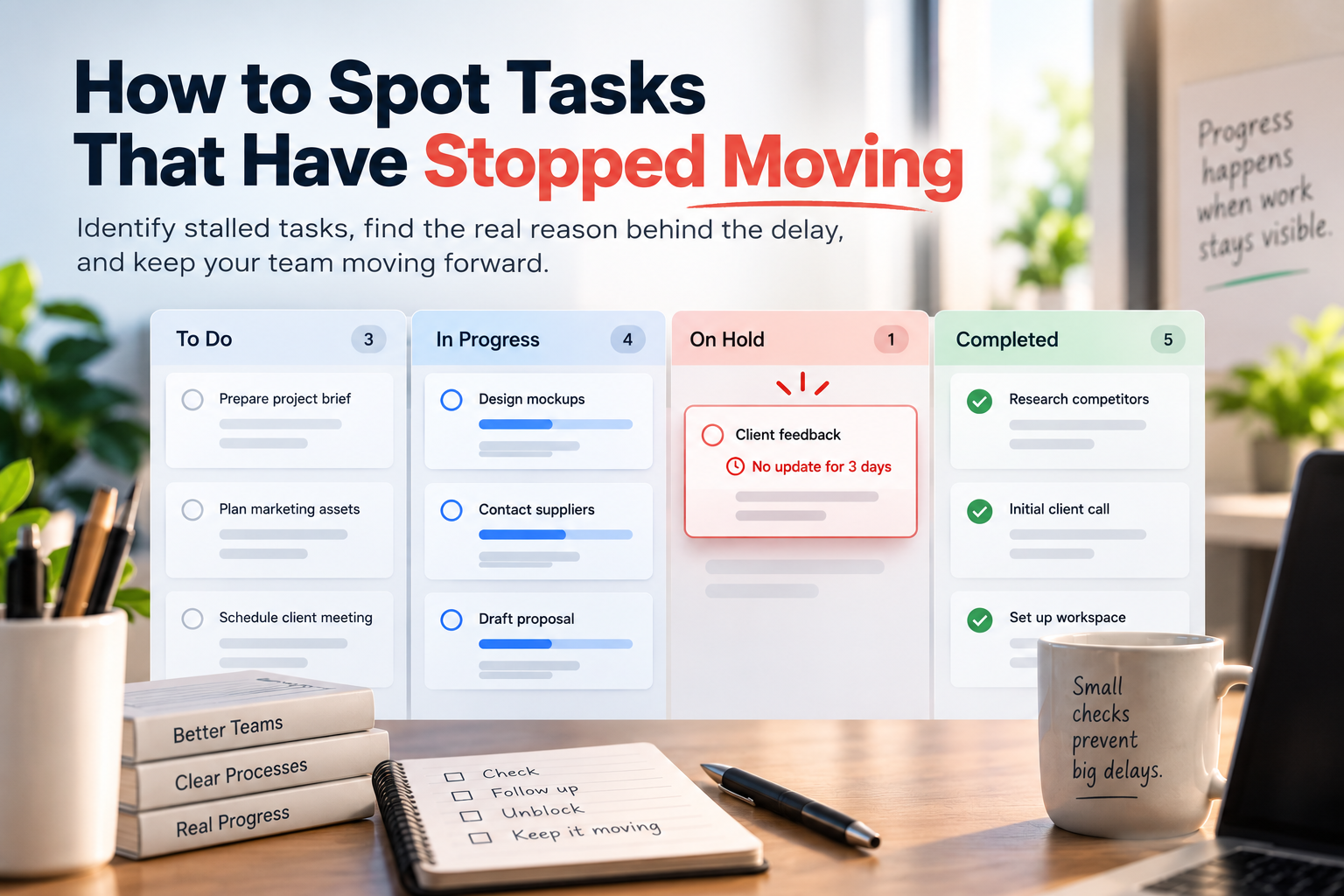
When a Task Hasn’t Moved, Someone Needs to Notice
Learn how to identify tasks that have quietly stopped progressing, distinguish inactivity from overdue work and create a practical review process for stalled tasks.

Employee A Has 12 Tasks. Employee B Has 3. What Does That Tell You?
Employee A has 12 tasks while Employee B has 3. Learn why workload balance requires more than equal task counts and how to review, prioritise and redistribute work.